In 2026, product teams are under more pressure than ever before. They’re expected to move faster, prioritize smarter, and respond instantly to shifting customer needs—all while managing complex stakeholders, tight budgets, and growing technical debt.
Yet many teams are still relying on traditional, static product roadmaps.
And that’s the problem.
Quarterly and annual roadmaps, once the backbone of product planning, are rapidly becoming obsolete. In a world defined by real-time data, rapid innovation, and relentless competition, static planning simply can’t keep up.
What’s replacing it?
AI-driven product prioritization.
The End of Static Roadmaps
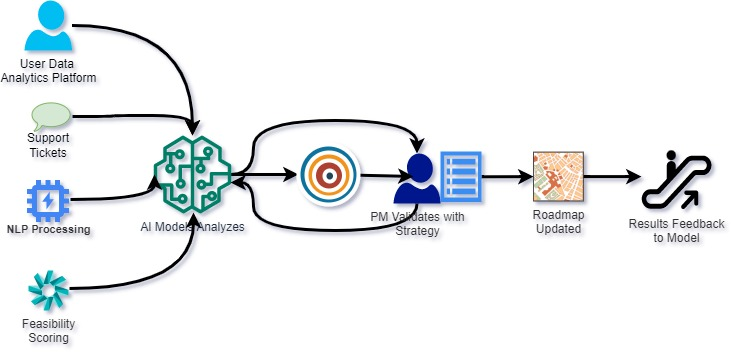
Traditional roadmaps were built for a slower era—one where markets evolved predictably and planning cycles could stretch for months. Today, product environments look very different:
- Competitors launch features weekly
- User expectations change overnight
- Market trends emerge in real time
- Regulatory and technology shifts happen without warning
By the time a traditional roadmap is approved, reviewed, and communicated, it’s often already outdated.
Modern product teams don’t need rigid plans.
They need adaptive intelligence.
What Is AI-Driven Product Prioritization?
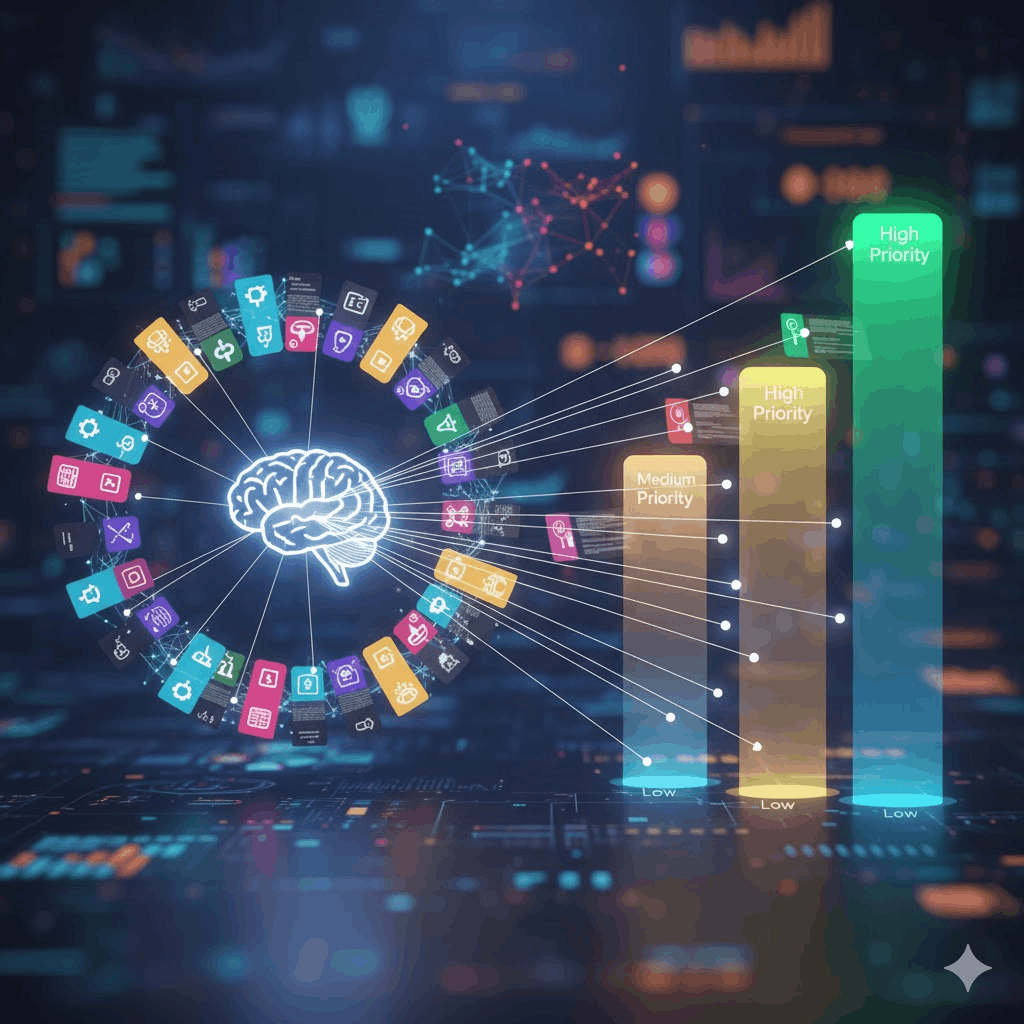
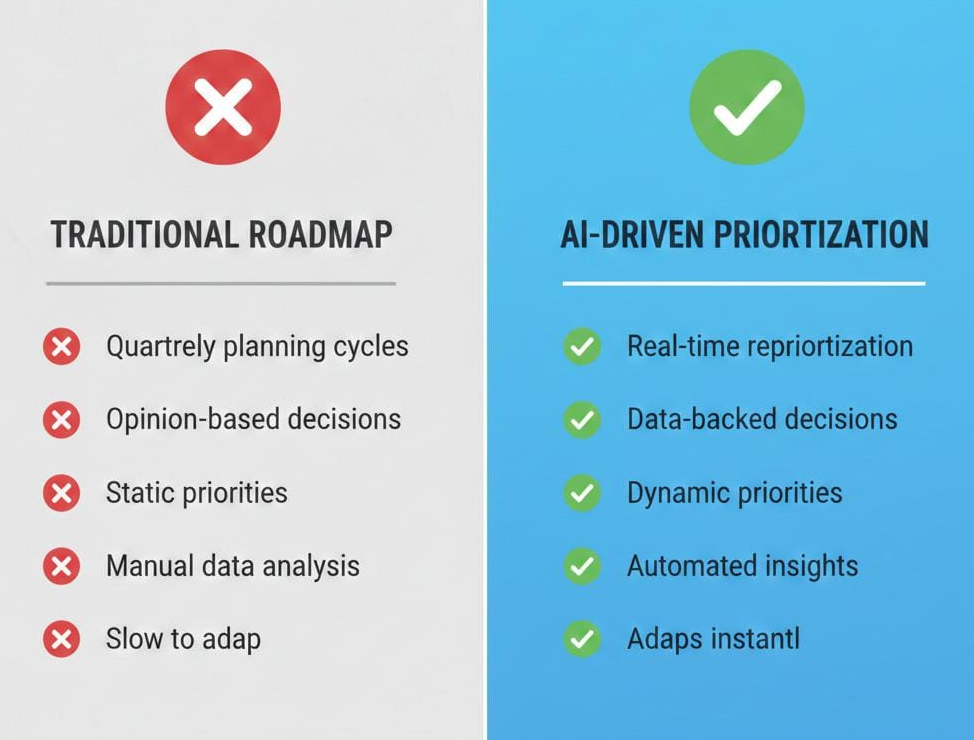
AI-driven prioritization refers to using machine learning models and generative AI to analyze user behavior, market signals, technical feasibility, and business impact—then automatically recommend which features to build next.
It’s more than just automation; it’s about intelligent decision-making that considers hundreds of variables humans simply can’t process at scale.
Real-world examples include:
- Predictive models analyzing user engagement patterns to identify high-impact features
- GenAI parsing thousands of support tickets to surface the most common pain points
- Real-time reprioritization based on competitor launches or market shifts
- Automated A/B test result analysis that feeds directly into roadmap adjustments
- Natural language interfaces where PMs ask, “What should we build next?” and get data-backed recommendations
The result?
Smarter decisions made faster — backed by data, not guesswork.
Why Traditional Roadmaps Are Failing in 2026
1. Market Velocity Has Outpaced Planning Cycles
Competitors launch features weekly, not quarterly. User expectations shift based on the latest viral product. Regulatory changes emerge overnight.
By the time a traditional roadmap goes through stakeholder approval cycles, the market has moved on.
What teams need:
- Real-time prioritization that adapts to market signals
- Continuous validation loops instead of quarterly planning sessions
- Agility to pivot within weeks, not months
Without AI-powered systems, teams remain locked into outdated priorities while competitors ship what users actually need today.
2. Data Overload Has Made Human Prioritization Impossible
Product teams now have access to:
- Millions of user interaction data points
- Thousands of support tickets and feature requests
- Dozens of A/B test results running simultaneously
- Competitive intelligence from multiple sources
- Technical debt assessments across hundreds of systems
The reality: No PM can manually synthesize this data and make optimal decisions.
Traditional approaches rely on intuition, HiPPO (highest paid person’s opinion), or simplified scoring frameworks that ignore 90% of available signals.
AI doesn’t replace product judgment—it augments it by surfacing patterns humans can’t see.
3. Cross-Functional Dependencies Have Become Unmanageable
Modern products involve:
- Engineering teams across multiple time zones
- Design, UX, data science, ML, DevOps, security
- External vendor integrations and API dependencies
- Compliance and legal review cycles
- Marketing and sales enablement timelines
Traditional roadmaps treat features as isolated projects. AI-driven systems map dependencies in real time and adjust priorities when blockers emerge.
Example: If a critical API vendor announces a breaking change, AI automatically flags impacted features and suggests reprioritization—before teams’ waste weeks building something that won’t work.
4. Personalization Has Made “One Roadmap” Obsolete
In 2026, different user segments want different features. Enterprise customers care about compliance and security. SMBs need simplicity and speed. Free users want viral features.
Traditional roadmaps assume one prioritized list works for everyone.
AI-driven approaches enable segmented roadmaps where prioritization differs by:
- User persona
- Geographic market
- Pricing tier
- Industry vertical
This isn’t theoretical—companies like Netflix, Spotify, and Amazon have been doing this for years. Now the tools are accessible to every product team.
5. Technical Debt Has Become a Silent Roadmap Killer
Every product team has faced this: halfway through building a new feature, engineering discovers critical technical debt that must be addressed first.
Traditional roadmaps don’t account for this dynamically.
AI-powered systems continuously analyze:
- Code quality metrics
- Performance benchmarks
- Security vulnerabilities
- Architecture scalability limits
Then automatically adjust feature priorities based on technical feasibility—before teams commit resources to infeasible projects.
The Future of Product Management Is AI-Augmented
Looking ahead, the shift is clear:
- Static quarterly roadmaps will fade away
- AI will generate multiple roadmap scenarios based on business goals
- Product managers will focus more on strategy than execution
- Continuous prioritization will replace rigid planning cycles
- New roles will emerge to manage AI-powered product operations
The question isn’t if AI will reshape product management.
It’s whether your organization will adopt it early—or fall behind.
Final Takeaway
In today’s fast-moving product landscape, success isn’t about sticking to a fixed plan. It’s about responding intelligently to real-world signals.
AI-driven product prioritization isn’t just a productivity upgrade—it’s a strategic advantage. It empowers teams to build what truly matters, adapt faster than competitors, and deliver continuous value to customers.
The future of product management isn’t just data-driven.
It’s AI-augmented.
And the teams that embrace this shift today will define the standards of tomorrow.
References:
Mind the Product. (2025, November 12). How AI is transforming product prioritization. Mind the Product.
Product Coalition. (2025, September 8). The end of static roadmaps: Why dynamic prioritization wins. Product Coalition.
Harvard Business Review. (2025, October 15). AI-powered decision making in product management. HBR.